If you have spent any time on social media lately, you have likely seen "signs you have ADHD" videos that effectively describe the human condition: struggling to focus when you’re bored, feeling restless on a Sunday afternoon, or forgetting why you walked into a room. Let’s get one thing clear: having a busy brain or a moment of distraction is not the same thing as a clinical diagnosis. It is a personality trait or a situational stressor, not a medical condition.
When we talk about adult ADHD and Generalized Anxiety Disorder (GAD), we are talking about two distinct neurological profiles that frequently look identical on the surface. Distinguishing between them—or acknowledging that you might be dealing with both—is the difference between getting a prescription that helps and one that makes you feel like you are vibrating out of your skin.
The Data Trap: What the CDC Numbers Actually Say
The Centers for Disease Control and Prevention (CDC) estimates suggest that about 4% to 5% of adults in the U.S. have ADHD. However, we have to be careful with how we interpret these numbers. Most of this data comes from self-reported surveys or healthcare billing codes. These figures measure clinical encounters, not necessarily the actual biological prevalence of the disorder in the population.

Why this matters in 2026: As access to virtual healthcare has expanded, so has the volume of diagnostic coding for ADHD. A survey number does not tell us how many people are accurately diagnosed versus how many are being treated for the "symptom of the month." It simply tracks who is currently sitting in a provider’s office (or a Zoom call) with an ADHD label in their chart.
The Clinical Overlap: Racing Thoughts and Restlessness
Patients often come to their primary care provider reporting "racing thoughts" and "restlessness." In a vacuum, these are non-specific symptoms. They are the clinical equivalent of saying "I have a pain in my body"—it could be a stubbed toe or a heart attack.
- ADHD-Driven Restlessness: This is often an internal "motor" that refuses to shut off, leading to a need for constant stimulation or physical movement to feel "regulated." Anxiety-Driven Restlessness: This is typically fueled by a fear of future outcomes, a need to "fix" something to lower stress, or physical tension stemming from a hyper-aroused nervous system.
When you present these symptoms to a doctor, it is vital to undergo screening for comorbidity. Statistics from the National Health Interview Survey consistently show that a significant percentage of adults with ADHD also screen positive for an anxiety disorder. They are not mutually exclusive, and treating one while ignoring the other is a recipe for medical frustration.
The Childhood Requirement and Late Diagnosis
One of the most persistent frustrations in the diagnostic process is the "childhood-symptom requirement." Per the DSM-5-TR, for an ADHD diagnosis to be valid, symptoms must have been present prior to age 12.
For many adults seeking help in their 30s or 40s, this feels like an impossible hurdle. You might not remember your third-grade report cards, and your parents might not remember your specific behavior at age eight. This requirement is intended to differentiate a neurodevelopmental disorder (ADHD) from an adult-onset stress response (Anxiety). If you didn't have the symptoms as a child, it is highly likely that your current struggles are rooted in something else, such as chronic stress, burnout, or an undiagnosed anxiety disorder.
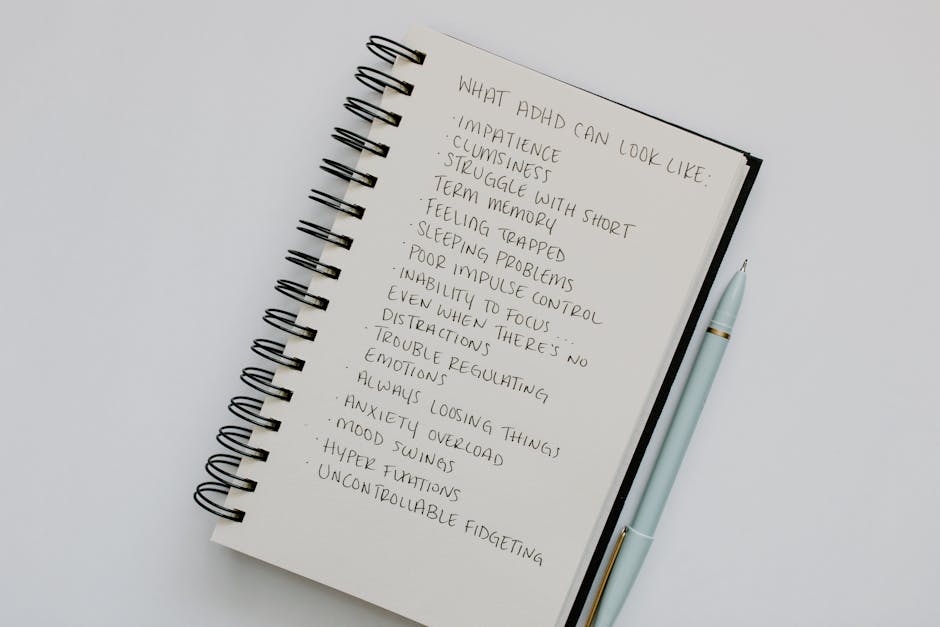
Diagnostic Comparison Table
Symptom ADHD Profile Anxiety Profile Racing Thoughts Divergent thinking; difficulty stopping a train of thought to move to the next task. Persistent worry; "looping" on negative outcomes or catastrophizing. Restlessness Physical/mental need for novelty or stimulation to focus. Physical tension, jitteriness, or an inability to relax due to fear. Focus Issues Inability to focus on "low-dopamine" (boring) tasks. Inability to focus because worry/anxiety is distracting the brain.The Logistics Nightmare: Telehealth and Pharmacy Refill Workflows
Even if you find a provider who listens, you are entering a broken ecosystem. The rise of telehealth has made it easier to get an initial evaluation, but it has created a massive disconnect in longitudinal care.
If you are prescribed a stimulant for ADHD, you are navigating the most complex pharmacy workflow in the American healthcare system. Because these medications are controlled substances (Schedule II), they are subject to intense DEA oversight. You cannot just "call in" a refill. You often need a monthly office visit, a specific electronic prescription file more info sent to your pharmacy, and then you have to hope the local pharmacy actually has the medication in stock.
The "Shortage" Reality: The ongoing stimulant supply chain issues mean that even with a valid diagnosis and a cooperative doctor, you might spend two days a month calling pharmacies to check stock. If you have anxiety, this workflow is effectively an "anxiety-triggering machine." The constant stress of wondering if your medication will be available—and the withdrawal symptoms that occur if you miss a dose—can mimic the very symptoms you were trying to fix.
Treatment Gaps: Beyond the Medication
The most common error in clinical management is stopping at the prescription pad. If your symptoms are anxiety-based, stimulants can actually make you feel *worse*, potentially increasing your heart rate and your sense of dread. If your symptoms are ADHD-based, anti-anxiety medications (like SSRIs) might help you feel calmer, but they will do absolutely nothing for your executive function or your ability to complete tasks.
We are seeing a major gap in "after-care." A diagnosis is not a solution; it is a baseline. If you are diagnosed with ADHD, your treatment plan should include:
Behavioral Strategy: Learning how to externalize your to-do lists and organize your time. Environmental Design: Creating a space that minimizes distractions. Regular Medication Monitoring: Assessing if the controlled substances are actually improving your quality of life, not just increasing your focus on the wrong things.
The Bottom Line: Don’t Self-Label
If you feel like you are struggling, please do not search adult ADHD missed bills for a "hack" or a TikTok video to confirm your self-diagnosis. You deserve a professional assessment that screens for comorbidities. You deserve a provider who understands that your life isn't just a list of DSM criteria, but a complex series of logistics involving work, insurance, and pharmacy supply chains.
ADHD and anxiety share a common language of symptoms, but they demand different clinical languages for treatment. Focus on finding a provider who understands the nuance—someone who sees the whole picture, not just the check-boxes on an intake form.